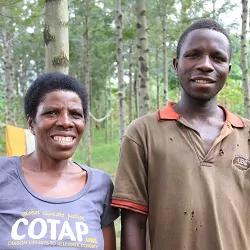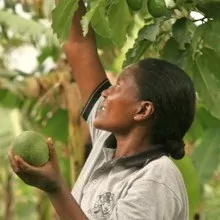

As of 12/29/25, COTAP has payed out $440,410.50 in Q4 2025 to our partner projects in Uganda, India, Fiji, and Indonesia.
| Country | Partner | Project(s) | Tonnes | Amount | Date paid |
|---|---|---|---|---|---|
| Uganda | Ecotrust | Trees for Global Benefits | 10,179 | $137,416.50 | 10/22/25 |
| Multiple* | Nakau | Drawa, Babatana | 10,128 | $136,728.00 | 10/23/25 |
| India | Synjuk/KHEPL | Khasi Hills REDD+ | 5,556 | $75,006.00 | 10/24/25 |
| Indonesia | KKI Warsi | Bujang Raba | 6,760 | $91,260.00 | 12/29/25 |
| Totals: | 32,623 | $440,410.50 |
Because the PV Climate standard requires all projects to share a minimum of 60% of carbon revenues with participants, we know that our payments will create a minimum of $264,246.30 in community income. That’s $8.10 per tonne!
This current round of payments is for what projects were owed as of 8/31/25, under our previous pricing of $15.00 per tonne with $13.50 per tonne (90%) paid to projects.
Our new offsetting rate effective 9/1/25 is $22.50 per tonne, with $20.25 per tonne paid to projects. Our € and £ prices and margins are slightly higher in order to guard against unfavorable exchange rate fluctuations. COTAP will continue paying out 90% for USD donations, and paying projects $20.25 per tonne and creating $12.15+ per tonne in community income, regardless of currency.
Making a Splash in the South Pacific
Something new and different happened with this round of partner payments. We placed an order for 10,128 tonnes for the Nakau Programme’s Drawa Forest Project in Vanua Levu, Fiji. However, there were only 3,611 credits available in Drawa’s account on the Markit Environmental Registry which weren’t already spoken for by other buyers. In the past, COTAP has accepted projects fulfilling a purchase order with a mix of issued and future credits from the same project.
Drawa is one of Nakau’s older projects with a relatively established set of recurring buyers. Meanwhile, Nakau’s Babatana Rainforest Conservation Project, in the Choiseul Province of the Solomon Islands, has two sub-projects involving the Siporae and Padezaka tribes which are newer and much more in need of partners and funding than Drawa.
In close collaboration with our partner Nakau, we made the decision that it would be much more impactful to allocate the 6,517-tonne balance of our purchase order to upcoming vintages from those sub-projects, as opposed to a future unissued Drawa vintage. Babatana is also certified under Plan Vivo and subject to its 60%+ revenue sharing requirement, so our joint decision still creates $52,787.70+ in income for remote indigenous communities in the South Pacific. We have added Babatana’s annual reports, verification report, and registration certificate to COTAP’s Dropbox Folder.
The Nakau Re-allocation in the Context of COTAP
The above scenario is one we’ve anticipated, and one which has been covered in our Terms of Use, since our founding in 2011. COTAP reserves the right to allocate donors’ tonnes to vintages that haven’t been issued yet, to other projects operated by the same partner, to other Plan Vivo-certified projects operated by organizations we haven’t partnered with yet, and even to non-Plan Vivo projects. Until now, we’ve only needed to utilize the pre-issuance option.
What other buyers might view as inconvenient, undesirable, or deal-breaking, COTAP views as an opportunity… for a mission-aligned, flexible, and patient partner to create project funding (and community income) that would otherwise be out of projects’ reach. In addition to the Babatana re-allocation, COTAP has:
- Paid upfront for credits that hadn’t been issued yet.
- Continued to raise funds for the Indonesia project while they were under a governmental carbon trading moratorium, and then paid them once the moratorium was lifted.
- Been “vintage agnostic” and have allowed projects to fulfill our orders with – and monetize for themselves – older and modest-sized tranches of unsold vintage remnants.
- Held onto funds at a project’s request in order to strategically time payouts to ensure they weren’t unfairly taxed on a unspent assets at their fiscal year-end.
- Served as a pricing and transparency guardrail – projects, their other buyers, and everyone else can see what we pay, and this keeps us competitive while empowering projects to reject low-ball offers for their finite credit supplies.
- Not requested or required either exclusivity or first right of refusal.