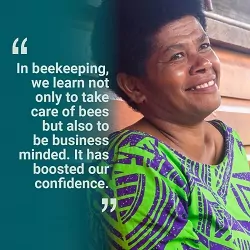

Our partner The Nakau Programme recently published a blog post entitled “How we make honey: Pure rainforest goodness from the Drawa Forest Project.”
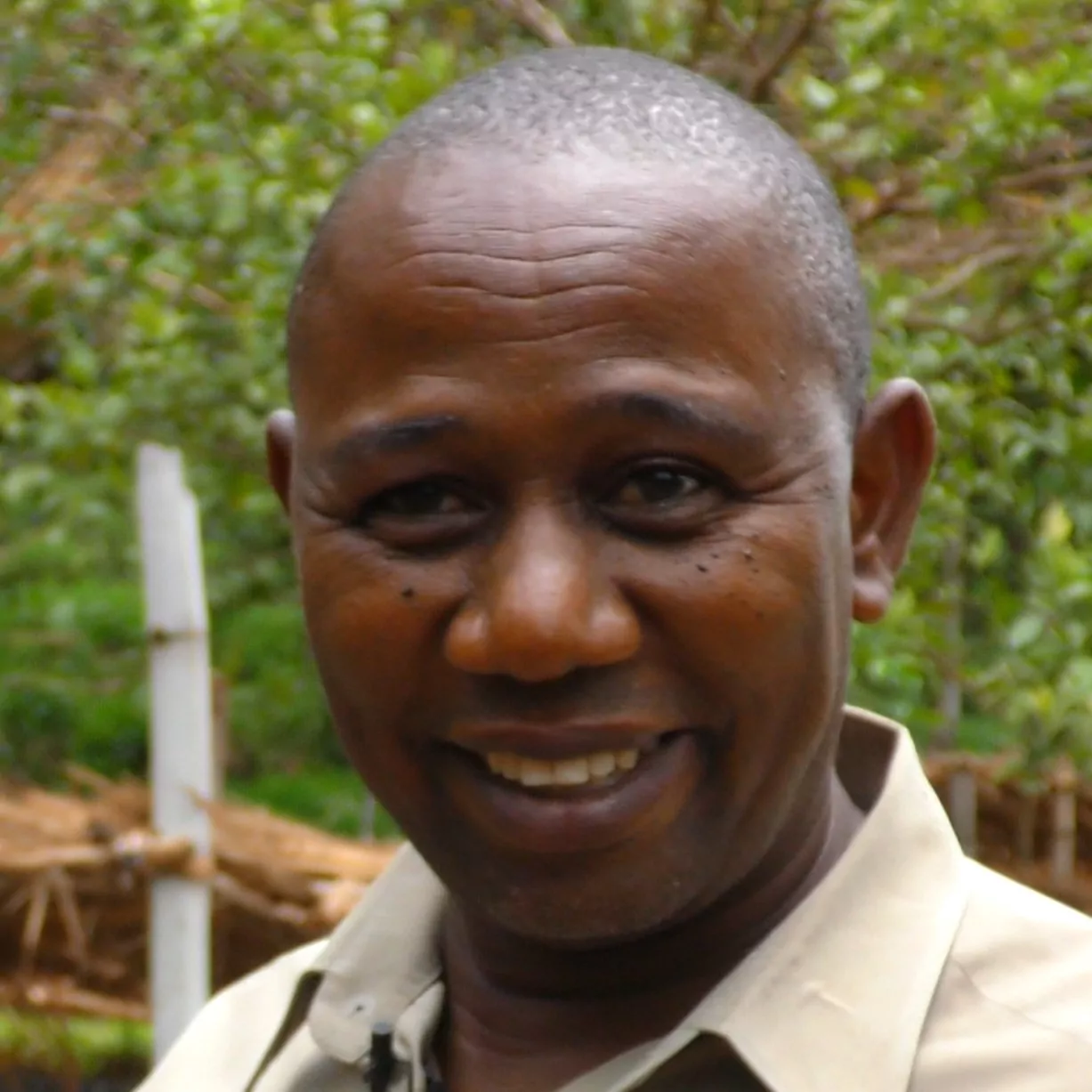
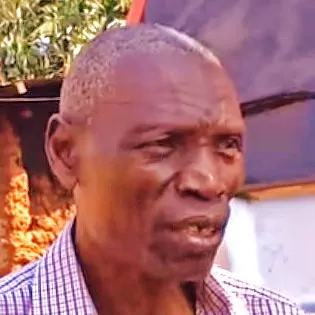
This reminded us of our conversation with Zinori Bikorwomuhangi, a participant in Ecotrust’s Trees for Global Benefits community reforestation project in Uganda.
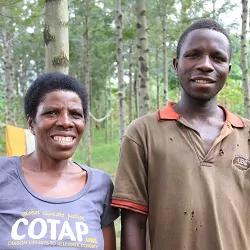
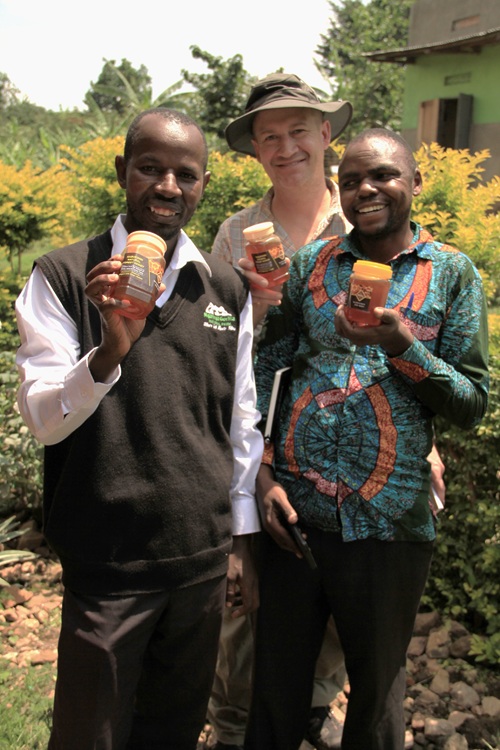
At right, Zinori (L) can be seen alongside the Ecotrust area coordinator Innocent Byamukama (R) showing off the final product… Kabukwiri Natural Forest Honey!
Zinori explained how he was once a forest extractor but became a forest protector… because of honey-making, which was facilitated and funded by a community forest carbon offset project.
Commonality on Opposite Sides of The Planet
There are of course many differences between countries, projects, and participants… but they’re also some key commonalities too. Payments for ecosystem services (PES) are often invested by forest-dwelling and forest-adjacent communities into enterprises or income generating activities (IGA) involving non-timber forest products (NTFP’s) like honey. Alternative IGA’s such as honey-making significantly reduce pressures to make money directly from the forest itself by selling timber or making charcoal.
A Key Difference Between Drawa and TGB
Both projects have introduced honey-making as a key IGA/NTFP which takes pressure off of forests and is also a fit with local capacity and markets.
In the case of folks like Zinori and Trees for Global Benefits, offsetting by individuals and organizations may create PES which assists newly-recruited participants to start new businesses in honey or other NTFP’s like like cash crops grown amongst, or medicinal herbs harvested from, the trees.
In the case of Drawa, it’s a different story. As explained in Nakau’s article, cyclones Yasa (2020) and Ana (2021) battered the 125 or so hives which were spread out across five Drawa mataqali (villages). To make matters worse, invasive varroa mites subsquently appeared in many of the remaining hives, which apparently had to be burned in order to eradicate the mites.
As a result, in 2024 only two mataqali were able to provide honey to sell — Batiri and Lutukina — both with reduced hives.
So, all the honey-making people-power and know-how are already in place and the Drawa community is seeking support to help them rebuild their once-thriving honey business.
You can support the Drawa Forest Project by offsetting your unavoidable CO2 emissions through it, and you can do that by “smashing” the Support This Community button at the top of this page!