
Project Information
Overview
Coordinated by the Clinton Development Initiative (CDI), the community-led Trees of Hope project is mitigating climate change through agroforestry and reforestation activities in the Dowa and Neno districts of Malawi. Malawi, in sub-Saharan East Africa, is amongst the poorest countries in the world, ranked 171th of 187 countries in the UNDP’s 2011 Human Development Index and annual Malawi per-capita income is an estimated $330. Launched in 2007, the project has grown to 200 community groups comprising 2,000 smallholder farmers and spans an area of over 488 hectares. The Trees of Hope project is part of a wider initiative conducted by CDI, at the invitation of the government of Malawi, to facilitate market-based solutions for agriculture, health, water, and sanitation.
Community and economic impacts
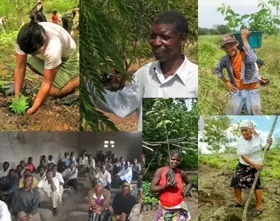
To date, participating farmers have planted more than 2 million trees that will sequester 200,000 tonnes of carbon dioxide. COTAP’s donation rate for this project is USD $9.90 per tonne, of which we pass on $9 per tonne to the project. This is expected to generate $742,500 of payments to farmers over a ten-year period. Farmers will receive 60% of this amount in years one, two, and three of their trees’ lifecycle; after that period, the trees are mature enough to farmers to profit from sale of mango, citrus, poles, and other non-timber forest products.
Transparency and accountability
The chart at right reflects the estimated distribution of funds based on the project’s fiscal 2011 distribution of expenses. Donations will be pooled and utilized first for retiring a commensurate number of credits from this project’s existing carbon credit inventories, which are based on plantings and tree growth to date. Pooled donations will then be matched with credits pertaining to upcoming planting seasons.
Approximately 50% of your COTAP contribution to this project will go to Malawian farmers and 40.9% goes towards program operations and program monitoring.
Each farmer is paid according to a personal Plan Vivo contract, consisting of the farmer’s preferred mix of tree species and planting methods. For credits which were sold during the project’s fiscal 2011 period, farmers are to be paid USD $5 per tonne of carbon dioxide which their plantings will sequester over time. Farmers are paid upon verified plantings and tree maintenance milestones over 10 years, with payments for a particular plot weighted as follows: 20% per year for the first three years and 10% in years 4, 5, 7, and 10.
The annual payment to any one farmer depends not only on their current-year plantings, but also on prior year plantings and the successful growth, survival, and maintenance of those prior plantings. Similar to other Plan Vivo projects, a buffer of 20% of projected CO2 sequestration is withheld as a buffer to address risk.
Incentivizing sustainable tree-based land use
Plantings and payments vary on a per-farmer basis as each farmer has their own unique plot of land in terms of size and suitability for different tree types. Each farmer also creates their own unique planting plan, and performs differently in terms of planting and maintaining their trees.
In addition to payments for their plantings’ sequestered carbon, farmers’ livelihoods are improved by a sustainable tree-based land use system. By recognizing and offering carbon revenue sharing for a specific variety of species and methods, the project design incentivizes planting mixes which will provide improved soil quality as well as access to construction materials and firewood. Inclusion of mango and citrus species serves not only to store carbon but also to bolster farmers’ food security while establishing supplemental income from tree-based cash crops. Further, participants have established over 574 kilometers of boundary plantings around their properties. The additional environmental co-benefits of these tree farms include the establishment and protection of wildlife habitat, reduction of run-off and reduced soil erosion through stem and root effects on soils, improvement of groundwater recharge systems, and general improve in microclimate.
Measures to ensure long-term success
The project has undertaken vital phases of community sensitization and education necessary given the newness and complexity of the opportunities which the project can provide. Information and training sessions enhance awareness about climate change, its potential impact on their livelihoods, mitigation and adaptation strategies, the Plan Vivo system, and the concept of carbon markets. To ensure that farmers are a proper fit and are making voluntary and informed decisions about participating, they are screened on their level of understanding of project principles, their landholding size and type for their desired planting mix, and their general enthusiasm.
A second measure to ensure long-term success is the phase-out of centralized tree seedling nurseries. CDI has built technical, equipment, and organizational capacity within the dispersed community groups necessary for seed gathering, seedling development, and nursery construction and maintenance. This transfer of tools and skills empowers the many scattered and remote community groups to be self-sufficient, and it promotes project ownership. It also lowers each group’s costs over the long term, and it makes project operations more efficient because fewer seedlings get lost or damaged in transit and they are more readily available when the local community seeks to plant them. The project now has over 100 operational communal nurseries.
A Beneficiary Case Study: Sekanakoni Banda
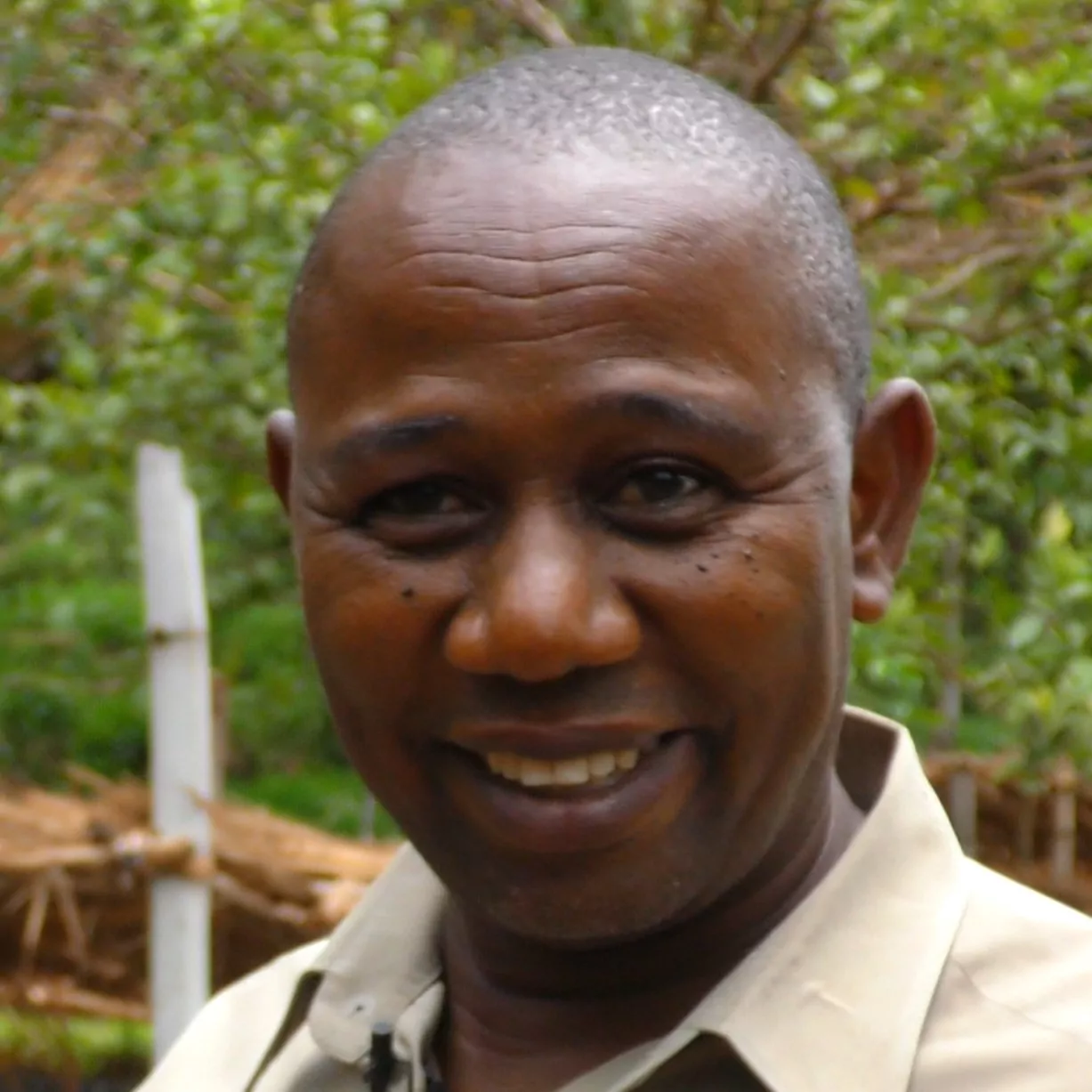
Sekanakoni Banda provides for a home of eight people in a rural district of Dowa, in central Malawi. His primary source of livelihood has been rain-fed subsistence farming, though he has also relied on the surrounding natural resources, particularly forests, to provide his other basic needs. Through the Trees of Hope project, Sekanakoni now owns nearly five hectares of woodlot, from which he harvests poles and firewood for his house. His wife no longer needs to walk long distances in search of firewood, and he is also able to sell wood to his neighbors to earn extra income and support his grandchildren in school. The woodlot has environmental benefits as well: it enables Sekanakoni to make use of land which would have otherwise been left idle, and the trees help reduce soil erosion and run-off in his other fields downstream, conserving soils in the process. Sekanakoni has also accumulated 800 tonnes of carbon credits, which will potentially earn his household over US $3,000 when sold on the carbon market. He plans to use this income to buy iron sheets to improve his home along with additional goats for his family.
About our partner
Building on President Clinton’s long-standing commitment to Africa, the Trees of Hope project is part of the Clinton Development Initiative (CDI), which implements programs which create lasting economic growth and empowerment for thousands of smallholder farmers in Malawi and Rwanda. President Bill Clinton established the William J. Clinton Foundation with the mission to improve global health, strengthen economies, promote healthier childhoods, and protect the environment by fostering partnerships among governments, businesses, nongovernmental organizations (NGOs), and private citizens to turn good intentions into measurable results. Since 2001, President Clinton’s vision and leadership have resulted in more than 4.5 million people benefiting from lifesaving HIV/AIDS treatment; more than 14,000 U.S. schools building healthier learning environments; more than 26,000 micro-entrepreneurs, small business owners, and smallholder farmers improving their livelihoods and communities; and more than 2 million tons of greenhouse gases cut or abated in some of the world’s largest cities. And President Clinton has redefined the way we think about giving and philanthropy through his Clinton Global Initiative, whose members have made nearly 2,300 commitments that are improving the lives of more than 400 million people in more than 180 countries.